The #1 Test Automation Skill Nobody Teaches (2026)
Discover the overlooked automation skill that helps QA engineers grow into senior, staff, and principal roles.

Last updated: July 1, 2026 · 15 min read · By Avinash K
Ask an intermediate automation engineer what separates a junior tester from a Principal SDET and you'll usually get answers centered on syntax or framework selection — custom Playwright fixtures, TypeScript generics, Kubernetes runners. Those competencies matter, but they miss the real architectural divide.
Eavesdrop on two Staff SDETs at any company we track on the SoftwareTestPilot QA Jobs Radar and you'll almost never hear them debating CSS vs XPath. You'll hear them obsessing over one topic: test data state engineering and deterministic sandboxing.
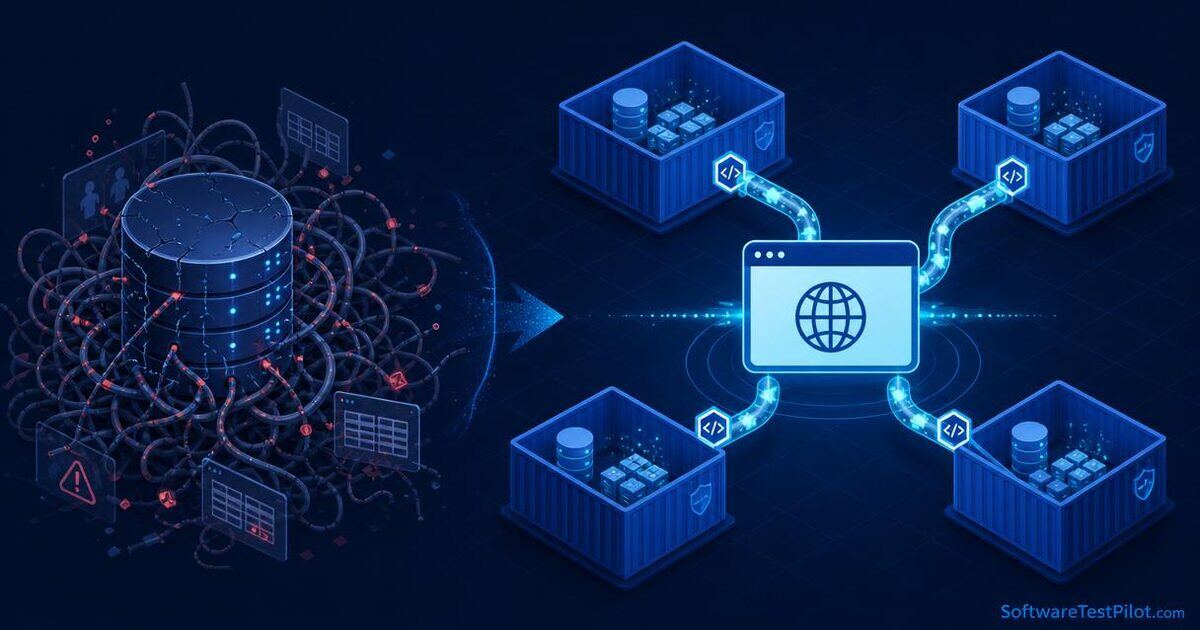
Here is the unspoken engineering reality of enterprise QA in 2026: 80% of automated suite failures in CI/CD are not caused by bad selectors, timeouts, or WebDriver bugs. They are caused by contaminated, shared, or unpredictable test data. When Test #48 tries to check out SKU-9921 that Test #12 already purchased three minutes earlier, no amount of explicit waits will save your build.
SoftwareTestPilot tip: Pair this deep dive with our Playwright complete guide, the 2026 Selenium architecture fix, the API mocking tools comparison, the AI Mock Interview, and the Resume ATS Review.
2. The three golden rules of deterministic test data architecture
+-------------------------------------------------------------------+
|             THE 3 PILLARS OF DETERMINISTIC TEST DATA              |
+-------------------------------------------------------------------+
| 1. STRICT IDEMPOTENCY — same result whether run 1x or 10,000x     |
| 2. EPHEMERAL SANDBOXING — unique synthetic data per worker        |
| 3. PROGRAMMATIC API SEEDING — never seed via the UI               |
+-------------------------------------------------------------------+
Why UI data seeding is an anti-pattern
Consider an E2E test that verifies invoice download. A junior engineer scripts the whole prerequisite chain through the UI:
- Open
/register, fill 6 fields, submit. - Confirm the verification email modal.
- Add a payment method in settings.
- Purchase an item to generate an invoice.
- Finally navigate to
/invoicesto test the actual download button.
Steps 1–4 take 45 seconds of UI browser interaction just to set up the prerequisite for step 5. A subtle CSS lag on the registration form and the test fails before it ever reaches the invoice page. An SDET applying Pillar 3 replaces steps 1–4 with a single backend API request that seeds the authenticated user and completed order in 150 ms, then launches the browser directly at /invoices.
3. Building a TypeScript API data factory for Playwright
Step 1 — the factory class (src/factories/ApiDataFactory.ts)
import { APIRequestContext, expect } from '@playwright/test';
import crypto from 'crypto';

export interface SeededAccountState {
  userId: string;
  email: string;
  accessToken: string;
  accountTier: 'STANDARD' | 'PREMIUM' | 'ENTERPRISE';
}

export class ApiDataFactory {
  private readonly request: APIRequestContext;
  private readonly baseUrl: string;
  private createdUserIds: string[] = [];

  constructor(request: APIRequestContext, baseUrl = 'https://api.example.com/v1') {
    this.request = request;
    this.baseUrl = baseUrl;
  }

  async createSyntheticUser(tier: 'STANDARD' | 'PREMIUM' = 'PREMIUM'): Promise<SeededAccountState> {
    const uniqueHash = crypto.randomBytes(6).toString('hex');
    const email = `sdet_worker_${Date.now()}_${uniqueHash}@softwaretestpilot.com`;

    const res = await this.request.post(`${this.baseUrl}/users/seed`, {
      headers: {
        'X-Internal-Test-Key': process.env.INTERNAL_API_SEED_KEY!,
        'Content-Type': 'application/json',
      },
      data: { email, password: 'DeterministicTestPassword2026!', role: tier, skipEmailVerification: true },
    });

    expect(res.status()).toBe(201);
    const payload = await res.json();
    this.createdUserIds.push(payload.id);
    return { userId: payload.id, email, accessToken: payload.accessToken, accountTier: tier };
  }

  async seedOrderForUser(userId: string, sku = 'PREMIUM-PLAN-SKU'): Promise<string> {
    const res = await this.request.post(`${this.baseUrl}/orders`, {
      headers: { 'X-Internal-Test-Key': process.env.INTERNAL_API_SEED_KEY! },
      data: { userId, sku, status: 'PAID', amount: 1200 },
    });
    expect(res.status()).toBe(201);
    return (await res.json()).orderId;
  }

  async purgeCreatedResources(): Promise<void> {
    for (const id of this.createdUserIds) {
      await this.request.delete(`${this.baseUrl}/users/${id}`, {
        headers: { 'X-Internal-Test-Key': process.env.INTERNAL_API_SEED_KEY! },
      }).catch(err => console.error(`Purge failed for ${id}`, err));
    }
    this.createdUserIds = [];
  }
}
Step 2 — inject via Playwright test fixtures
import { test as baseTest } from '@playwright/test';
import { ApiDataFactory, SeededAccountState } from '../factories/ApiDataFactory';

type DataFixtures = { dataFactory: ApiDataFactory; seededPremiumUser: SeededAccountState };

export const test = baseTest.extend<DataFixtures>({
  dataFactory: async ({ request }, use) => {
    const factory = new ApiDataFactory(request);
    await use(factory);
    await factory.purgeCreatedResources(); // guaranteed teardown
  },
  seededPremiumUser: async ({ dataFactory }, use) => {
    const account = await dataFactory.createSyntheticUser('PREMIUM');
    await dataFactory.seedOrderForUser(account.userId, 'PREMIUM-PLAN-SKU');
    await use(account);
  },
});

export { expect } from '@playwright/test';
Step 3 — blazing-fast, deterministic UI test
import { test, expect } from '../../src/fixtures/testFixtures';

test('premium user downloads invoice instantly', async ({ page, seededPremiumUser }) => {
  await page.addInitScript((token) => {
    window.localStorage.setItem('auth_access_token', token);
  }, seededPremiumUser.accessToken);

  await page.goto('https://softwaretestpilot.com/dashboard/invoices');
  const row = page.locator('[data-testid="invoice-row-PREMIUM-PLAN-SKU"]');
  await expect(row).toBeVisible();

  const downloadPromise = page.waitForEvent('download');
  await row.locator('[data-testid="download-pdf-button"]').click();
  const download = await downloadPromise;
  expect(download.suggestedFilename()).toContain('Invoice-PREMIUM-PLAN-SKU.pdf');
});
The UI test drops from 45 seconds to 2.1 seconds, runs completely isolated from parallel workers, and guarantees zero data collisions. See the Playwright fixtures documentation and the Playwright locators guide for the full pattern library.
4. Ephemeral Docker databases & SQL transaction rollbacks
+-------------------------------------------------------------------+
|          EPHEMERAL DOCKER CONTAINER SANDBOXING PIPELINE           |
+-------------------------------------------------------------------+
| [GITHUB ACTIONS PR WORKFLOW]                                      |
|    +--> docker run -d postgres:16   (spawn ephemeral db)           |
|    +--> run Liquibase / Knex migrations (~800 ms)                  |
|    +--> execute sharded Playwright suite against the sandbox       |
|    +--> docker rm -f  (destroy container on completion)            |
+-------------------------------------------------------------------+
Why ephemeral databases are the holy grail
Every test run starts with a pristine schema. If an automated test deletes the entire customers table or inserts 50M rows, it has zero impact on staging or other engineers. When the suite finishes, the Docker daemon destroys the container volume in milliseconds.
SQL transaction rollback hooks
When Docker isn't feasible, advanced SDETs wrap each test in BEGIN TRANSACTION and fire ROLLBACK at teardown. The database instantly reverts to its exact pre-test state, leaving zero residue. Combine with our API testing tutorial and the SQL for QA interview guide.
5. Sandboxing third-party webhooks & payment services
+-------------------------------------------------------------------+
|             WIREMOCK THIRD-PARTY SERVICE SANDBOXING               |
+-------------------------------------------------------------------+
| [Application Under Test] -- POST /v1/charges --> (intended Stripe) |
|                                    v                              |
| [WireMock in CI container on :8080]                               |
|      returns synthetic webhook JSON signature in < 10 ms          |
| [App receives 200 OK -> UI updates instantly]                     |
+-------------------------------------------------------------------+
If your suite hits Stripe's live sandbox on every CI run, your pipeline stability is held hostage by external latency and rate limits. Deploy local mock servers — WireMock, Mountebank, or Playwright page.route interception — alongside your test runners. Internal DNS redirects the outbound call to the mock, which returns a deterministic JSON contract simulating a success, decline, or async webhook.
The result: 100% network determinism, sub-millisecond third-party verification, and CI runs that never fail because AWS us-east-1 sneezed.
6. Conclusion & your 24-hour action step
Junior QA engineers argue about selectors and framework syntax. Elite SDETs focus on the architectural foundation that makes automation possible: deterministic test data engineering. Enforce idempotency, replace slow UI registration with API data factories, sandbox parallel runs inside ephemeral Docker containers, and mock unpredictable third-party webhooks. When your data state is deterministic, your automation suite becomes an engine of engineering velocity instead of a lottery.
Your 24-hour action step
Audit your suite today. Find the single slowest end-to-end test — the one that spends 30 seconds creating a user before testing its actual feature. Replace that UI setup with an API data factory that injects the auth token directly into the browser context. Then benchmark six-figure SDET roles that reward this skill on the SoftwareTestPilot QA Jobs Radar, rehearse the story with the AI Mock Interview, and quantify the pipeline speedup on your resume via the Resume ATS Review.