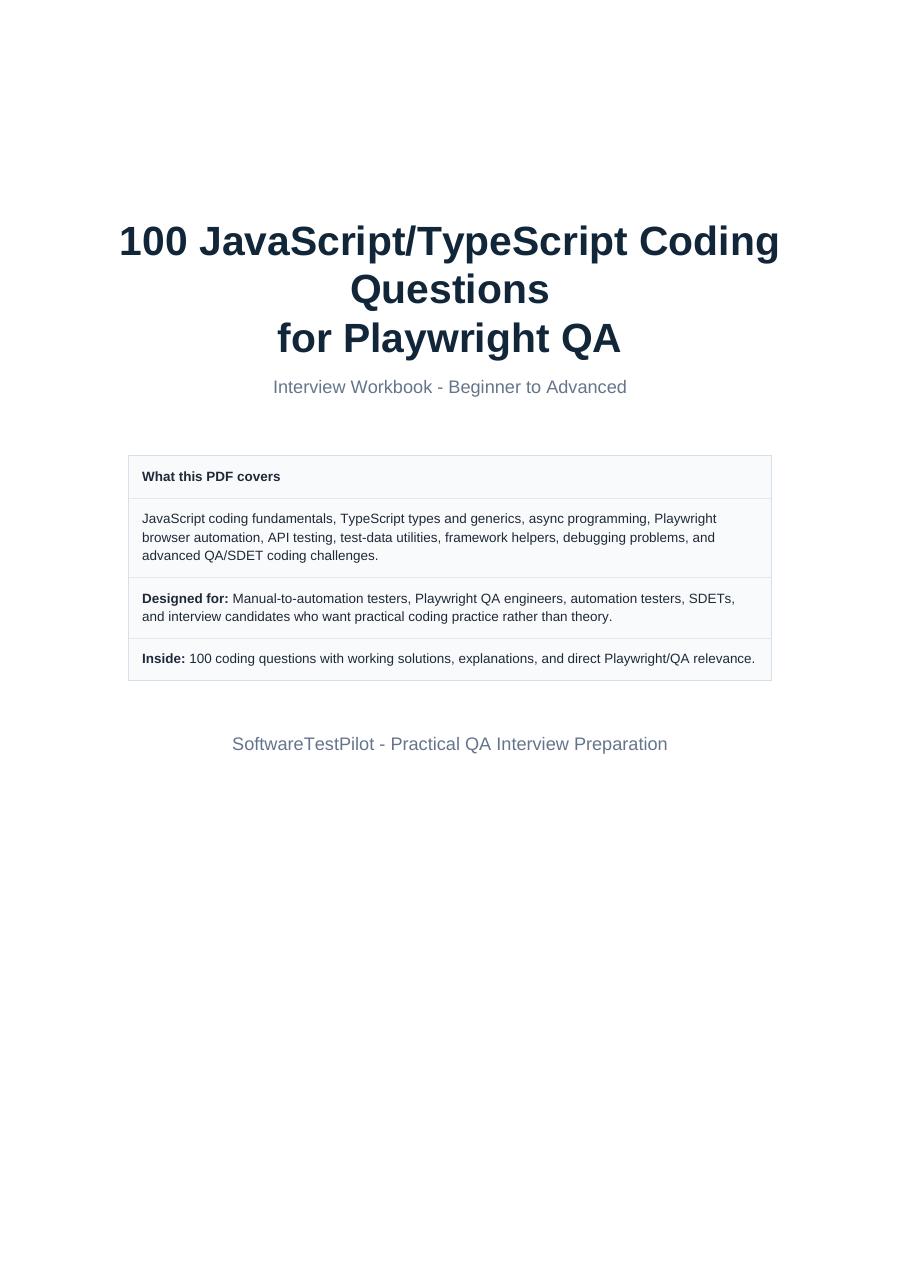
100 JavaScript and TypeScript Coding Questions for Playwright QA
Published by SoftwareTestPilot
PDF • 29 pages • Workbook • Beginner to Advanced • JavaScript / TypeScript for QA
Published 21 September 2026 • Updated 22 September 2026
Included in QA Notes Vault
Preview this resource below, or unlock the complete QA Notes Vault for ₹199 lifetime access.
Write and explain Playwright automation code without hesitating on JavaScript basics.
Already bought the Vault?
Read 100 JavaScript and TypeScript Coding Questions for Playwright QA
Like this resource? Unlock this plus 89+ other QA notes with lifetime Vault access.
Overview
For each question, first explain the approach in plain language, then write the solution, then discuss edge cases. In Playwright interviews, the strongest answers connect JavaScript/TypeScript knowledge to reliable automation design. A strong coding answer usually covers: input assumptions -> approach -> code -> edge cases -> complexity/reliability -> how the same
What you'll learn
- JavaScript fundamentals for QA
- TypeScript essentials for Playwright
- Async JavaScript and promise challenges
- Playwright coding questions
- API and test-data coding for Playwright QA
- Framework and debugging coding challenges
Topics covered
- playwright
Table of contents
- How to Use This Workbook
- Attempt each problem before reading the solution
- Run the code in Node.js or your Playwright TypeScript project
- Rewrite solutions in your own style so you can explain them confidently
- 1. JavaScript Fundamentals for QA
- 2. TypeScript Essentials for Playwright
- 3. Async JavaScript and Promise Challenges
- 4. Playwright Coding Questions
- 5. API and Test-Data Coding for Playwright QA
- 6. Framework and Debugging Coding Challenges
- 7. Advanced Practical Interview Challenges
Preview from this resource
What this PDF covers
JavaScript coding fundamentals, TypeScript types and generics, async programming, Playwright browser automation, API testing, test-data utilities, framework helpers, debugging problems, and advanced QA/SDET coding challenges. Designed for: Manual-to-automation testers, Playwright QA engineers, automation testers, SDETs, and interview candidates who want practical coding practice rather than theory. Inside: 100 coding questions with working solutions, explanations, and direct Playwright/QA
How to Use This Workbook
Do not memorize these programs line-by-line. For each question, first explain the approach in plain language, then write the solution, then discuss edge cases. In Playwright interviews, the strongest answers connect JavaScript/TypeScript knowledge to reliable automation design. A strong coding answer usually covers: input assumptions -> approach -> code -> edge cases -> complexity/reliability -> how the same idea appears in automation. • Attempt each problem before reading the solution. • Run the code in Node.js or your Playwright TypeScript project. • Rewrite solutions in your own style so you can explain them confidently. • For Playwright questions, prefer state-based synchronization and semantic locators over fixed
Interview Mindset for Playwright Coding
Playwright QA interviews rarely test algorithms in isolation. Interviewers often want to see whether you can transform data, model it with TypeScript, control asynchronous work, write stable locators, validate APIs, and build reusable utilities without hiding failures. Prefer clear code Readable automation is easier to maintain than clever one-liners. Use TypeScript intentionally Types should catch mistakes at compile time and communicate contracts. Understand async/await Missing await is a common source of unpredictable automation behavior. Use Playwright auto-waiting Wait for states and events instead of arbitrary sleep calls. Design for diagnostics Strong frameworks capture enough context to debug a CI
A short extract taken from the first 8 of 29 pages. The complete notes are in the QA Vault.
Tools covered
- Playwright
- Java
- JavaScript
- TypeScript
Skills covered
- JavaScript / TypeScript for QA
- Playwright
Who this resource is for
- Fresher
- Automation Tester
- SDET
- API Tester
- QA Engineer
100 JavaScript and TypeScript Coding Questions for Playwright QA: common questions
1.What does 100 JavaScript and TypeScript Coding Questions for Playwright QA cover?
2.How long is this PDF and what format is it in?
3.Who is this resource for?
4.How do I get the full PDF?
QA Notes Vault
Get 100 JavaScript and TypeScript Coding Questions for Playwright QA and the complete Vault
Download this resource in full, plus 89+ other quick-revision QA notes — all for ₹199 with lifetime access.
- One-time payment
- Lifetime access
- Secure checkout
Related QA Resources
More notes on this topic, all included in the same Vault purchase.
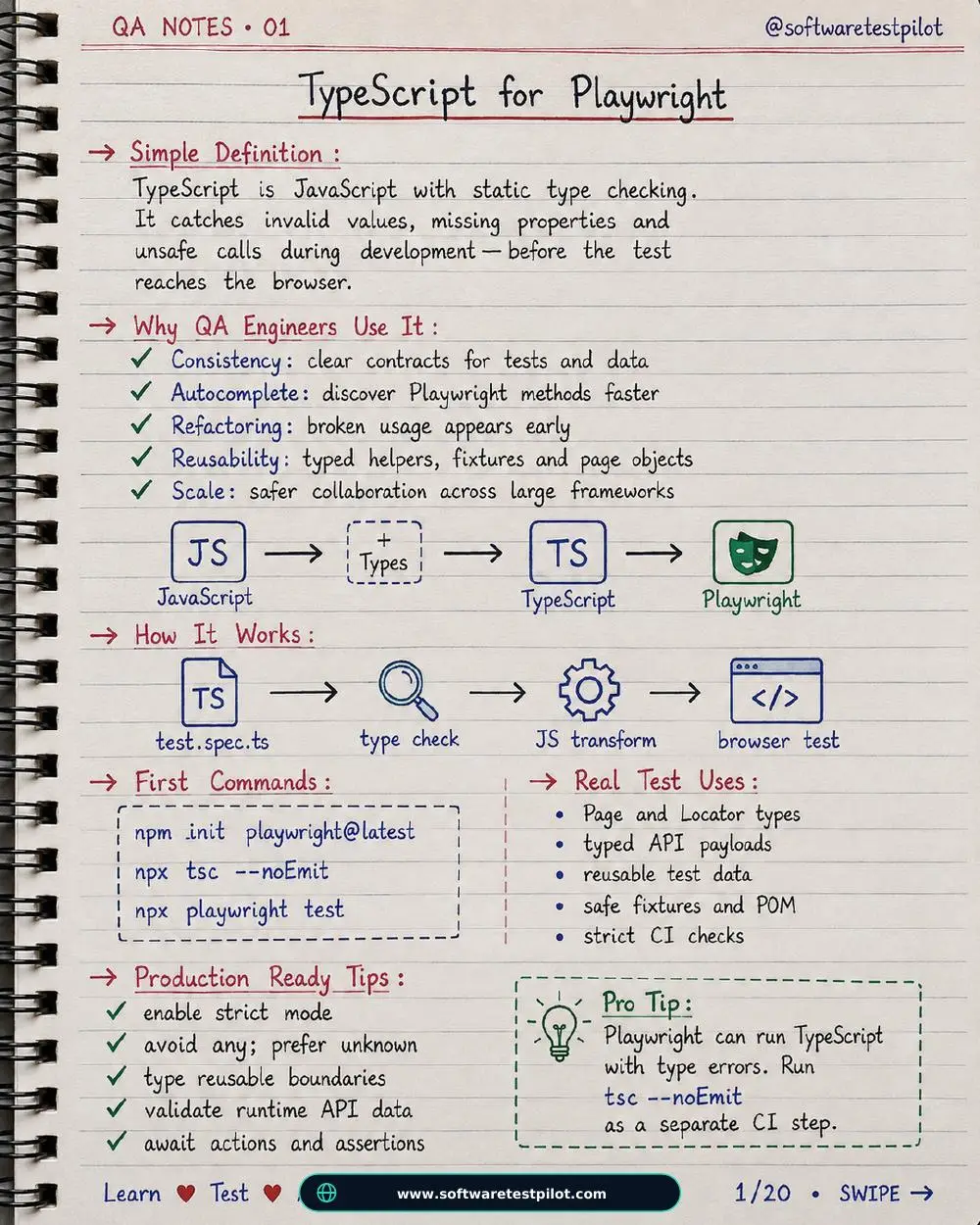
TypeScript For Playwright
Included in QA Notes VaultNotes· All Levels· 22 pages
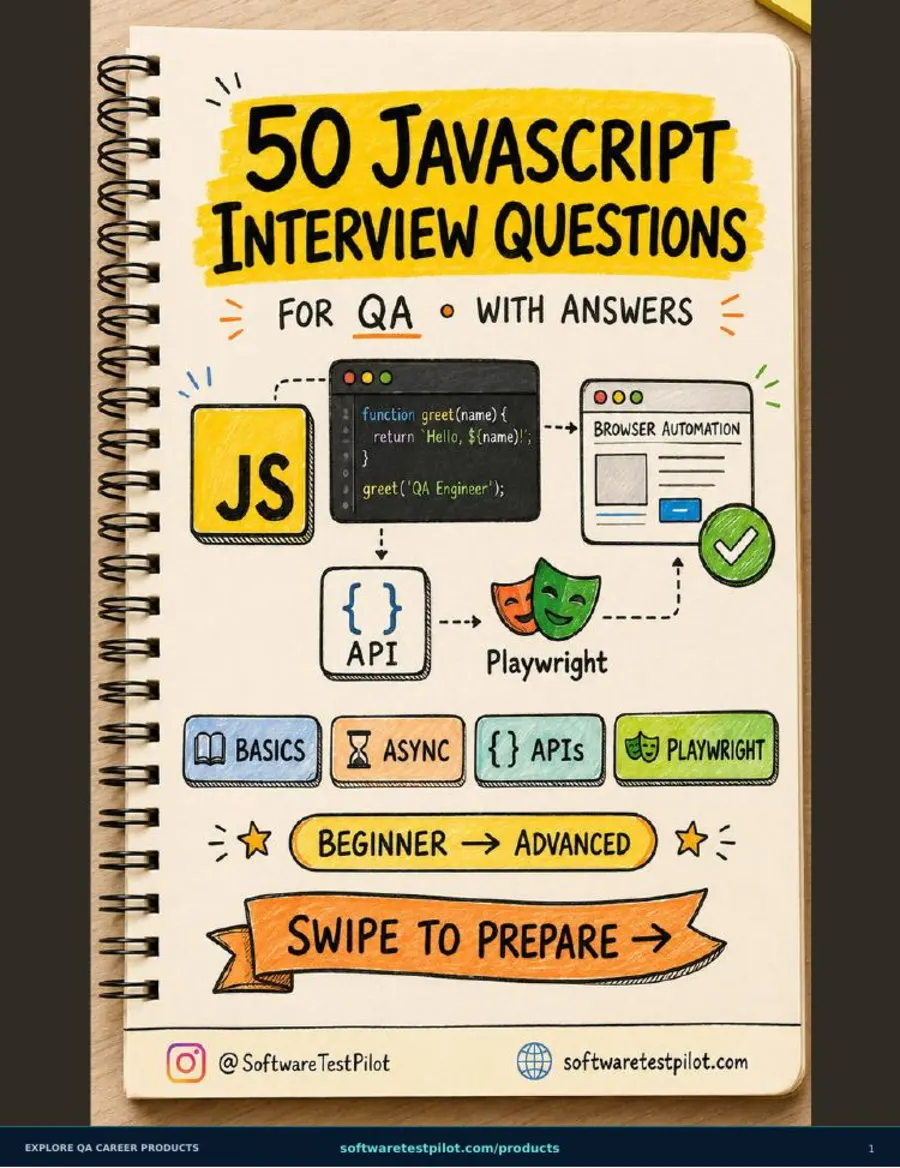
50 JavaScript Interview Questions for QA
Included in QA Notes VaultInterview Questions· All Levels· 22 pages
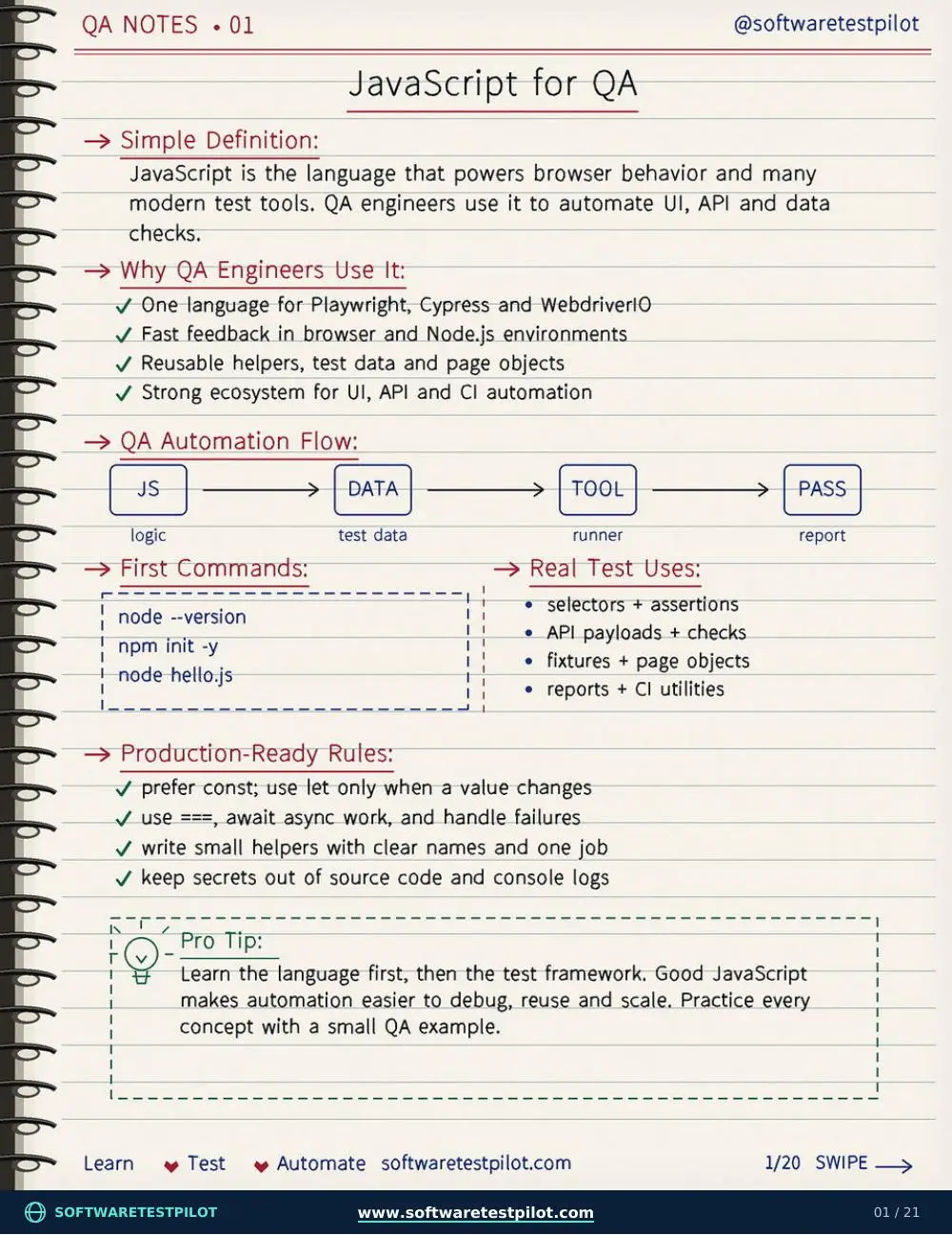
JavaScript Complete Notes For QA
Included in QA Notes VaultNotes· Advanced· 21 pages